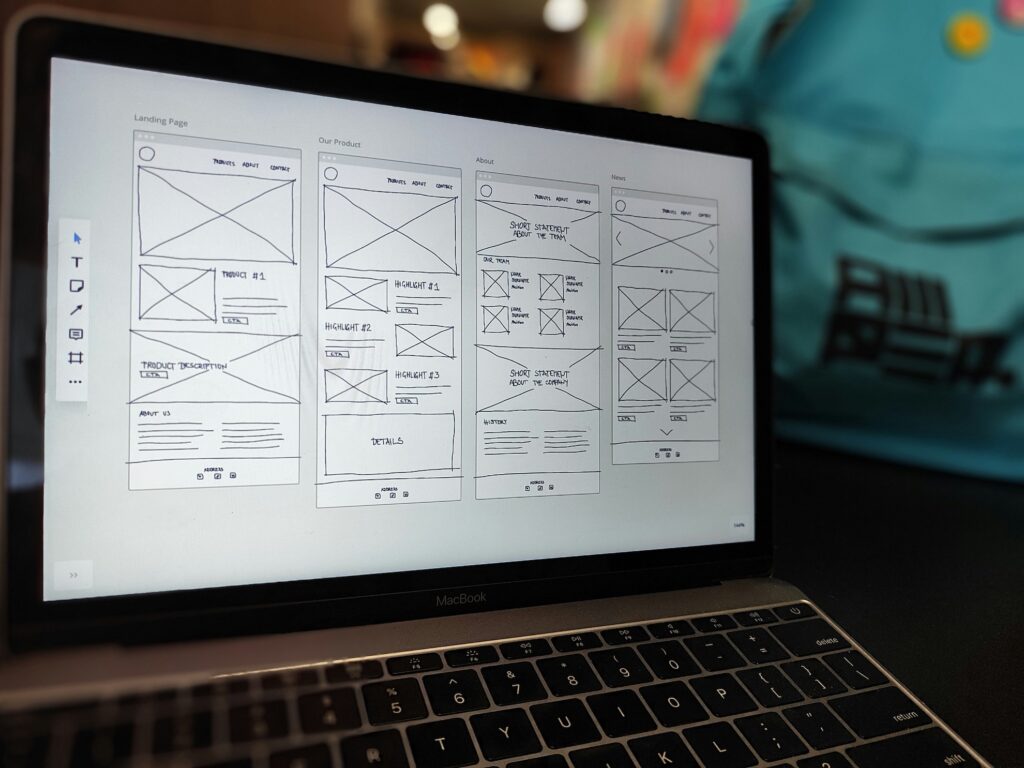

As we approach 2025, the role of wireframes in design becomes increasingly crucial. Wireframes serve as the foundation for user experience, enabling designers to craft intuitive interfaces for the digital world. This article delves into the evolution of wireframes, their impact on design processes, and the emerging trends that will shape user interaction in the years to come.
Understanding Wireframes
Wireframes play a crucial role in enhancing user experience (UX) design by serving as a visual aid that outlines the structure and functionality of a digital product. They are instrumental in illustrating navigation paths and how users will interact with elements across a website or application. By creating a visual blueprint, wireframes enable designers to focus on the user journey, ensuring that it is seamless and intuitive.
A primary function of wireframes is to bridge the gap between stakeholder objectives and user needs. By clearly mapping out the interface and its components, designers can facilitate discussions with stakeholders, ensuring that their goals are met while keeping the user’s perspective at the forefront. This collaboration fosters an environment where feedback is cultivated, allowing the design to evolve in alignment with real user expectations and behaviors.
Wireframes also play a pivotal role in the early testing phases of the design process. They allow teams to gather qualitative insights and validate ideas before proceeding to more detailed design phases. For example, usability tests conducted with wireframes can highlight potential pain points in navigation or layout, leading to necessary adjustments. Successful applications, such as Airbnb and Dropbox, have effectively utilized wireframes to streamline their UX, leading to user satisfaction and enhanced engagement.
The Role of Wireframes in User Experience Design
Wireframes play a crucial role in user experience (UX) design by providing a tangible representation of a product’s architecture, facilitating the visualization of navigation paths and interactions. By mapping out how users will engage with a product, wireframes act as a guide to ensure that the design aligns with both stakeholder goals and user needs. This alignment is essential for creating a seamless user experience, as it allows designers to prioritize features and functionalities based on user expectations and organizational objectives.
In the design process, wireframes serve as a testing ground for ideas, enabling designers to gather feedback early and iterate on concepts before diving into more detailed visual designs. This iterative approach minimizes the risk of costly revisions during later stages of development and fosters an agile workflow. For instance, a team might create a low-fidelity wireframe to visualize a new product’s main navigation and conduct user testing to gauge comprehension and engagement.
Successful applications of wireframes are evident in industries ranging from e-commerce to mobile applications, where early-stage prototyping has led to improved user satisfaction rates. By emphasizing the importance of wireframes in UX design, stakeholders can better appreciate how these tools not only clarify a product’s intent but also shape a favorable experience for users in an increasingly complex digital landscape.
Impacts of Emerging Technologies on Wireframing
The continuous advancement of emerging technologies is transforming wireframing practices, making them more collaborative and efficient than ever before. As we approach 2025, innovations like artificial intelligence (AI) and virtual reality (VR) are redefining how designers create and utilize wireframes. AI-powered tools can analyze user data and predict design decisions, enabling designers to generate wireframes that are not only visually representative but also aligned with user expectations. This increased accuracy helps in faster iterations, leading to a more streamlined design process.
Moreover, the rise of VR is introducing a new dimension to wireframing. Designers can create immersive wireframes that stakeholders can interact with in real-time, offering a rich understanding of spatial relationships and user paths. This interactivity lays the groundwork for deeper feedback loops, as users can experience designs in a way that flat screens cannot convey.
Tools that facilitate real-time collaboration are evolving as well, fostering agile methodologies in wireframe creation. Teams can work simultaneously across different locations, enhancing communication and accelerating decision-making. As the landscape of design continues to evolve, wireframes will increasingly serve as dynamic blueprints that adapt to emerging technologies, enhancing the overall design experience and resulting in user-centered solutions.
Looking Ahead: The Future of Wireframes in 2025
The evolution of wireframes by 2025 is likely to reflect a significant shift in design philosophies that prioritize user-centric, dynamic experiences. As design becomes increasingly informed by data-driven insights, wireframes will evolve from static representations to living documents that adapt to user interactions and behaviors. The anticipated emergence of more fluid user interfaces will lead to the development of wireframes that are not only visually iterative but can also simulate real-time responsiveness.
New standards may emerge, focusing on integrating elements of motion design and micro-interactions within wireframes, thereby allowing designers to anticipate how users will engage with content. Such a shift means wireframes will transcend their traditional role; they will serve not just as blueprints but as prototypes that incorporate experiential elements early in the design process.
Moreover, as user expectations grow increasingly sophisticated with experiences that feel personalized and intuitive, wireframes will need to reflect deeper layers of usability and accessibility. This could involve enhanced features such as adaptive layouts and intelligent interface suggestions based on user context. As we approach 2025, wireframes will function as an essential component in a holistic design strategy, merging creativity with technology to create seamless, engaging digital experiences.